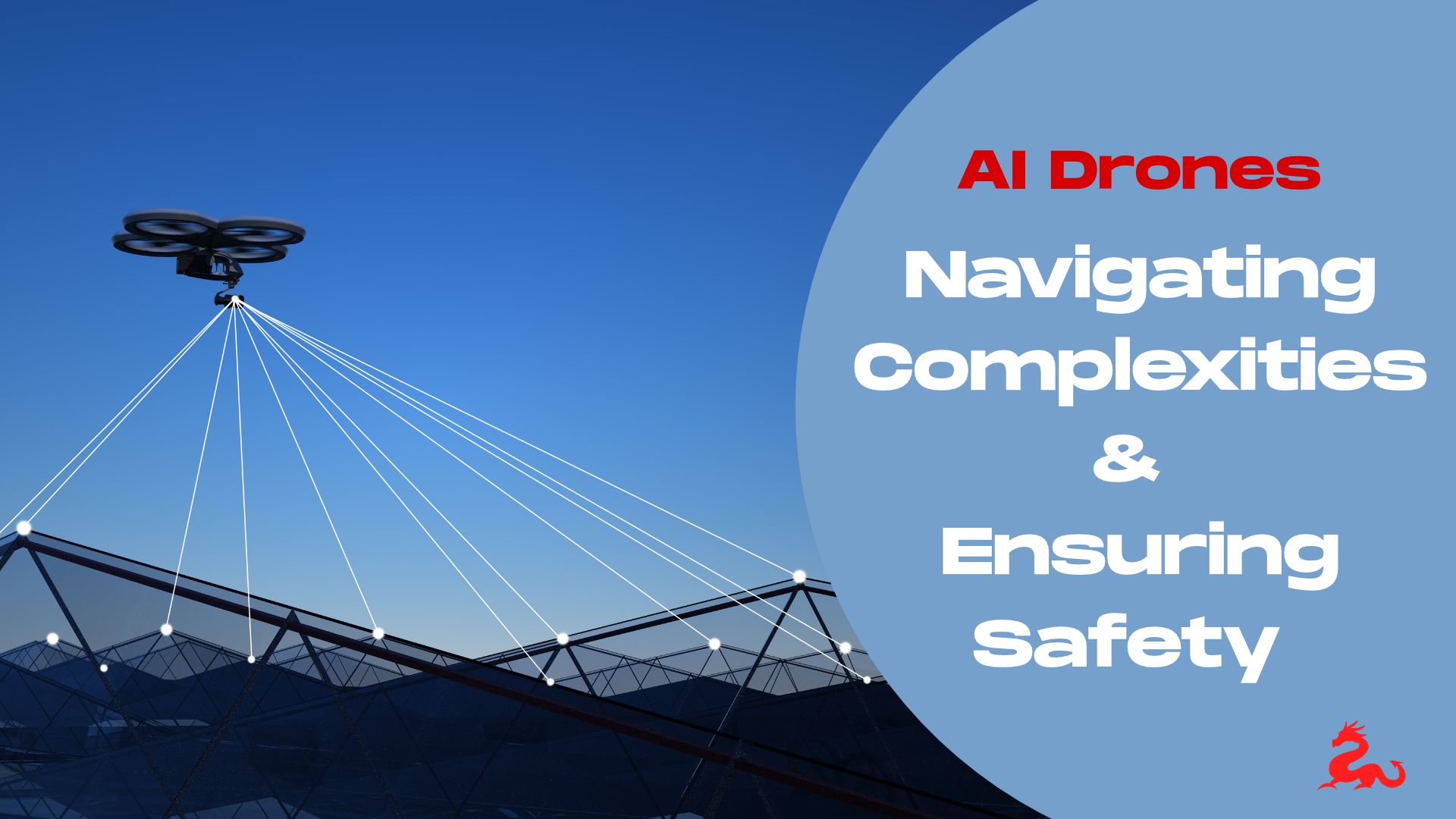
Drones are rapidly transforming industries, enhancing logistics, agriculture, security, and emergency response. While automation increases efficiency, it also introduces complex challenges in control mechanisms, risk management, and safety assurance. Independent AI controllers are now at the forefront of addressing these challenges, ensuring precise command execution and intelligent safety protocols.
Real-Life Examples of AI-Powered Drone Control
Disaster Response & Search Operations
After a devastating earthquake in Turkey (2023), autonomous AI-controlled drones played a crucial role in locating survivors. Equipped with thermal imaging and AI-driven decision-making, these drones were able to autonomously scan debris fields, bypass obstacles, and prioritise the most critical areas without direct human intervention, reducing response time and saving lives.
Autonomous Security Patrols
In Singapore, AI-powered drones now operate as independent security patrol units at major infrastructure sites. These drones detect intrusions, analyse threats, and communicate seamlessly with human operators. AI-driven real-time surveillance algorithms allow drones to classify risks without external commands, improving security response times.
AI-Powered Drone Logistics in Remote Areas
Companies like Zipline have revolutionised medical supply delivery using autonomous drones powered by AI controllers. In rural regions of Africa and Southeast Asia, these drones calculate optimised flight paths, adjust for wind patterns, and autonomously drop supplies with precision, all without human oversight.
The Benefits of an Independent AI Controller for Command & Control
Real-Time Decision-Making Without Human Delays
AI controllers process vast amounts of data instantly, evaluating environmental changes, obstacles, and mission priorities without waiting for human commands. This ensures seamless operations, even in unpredictable conditions.
Multi-Layered Redundancy & Autonomous Fail-Safes
Drones powered by independent AI don’t rely on a single system, meaning backup protocols activate instantly in case of primary system failures, mitigating risks from power outages or communication breakdowns.
Adaptive Flight Coordination & Autonomous Conflict Resolution
In complex airspace environments, AI controllers negotiate flight paths autonomously, ensuring safe navigation around other aircraft and dynamic adjustments to avoid collisions.
Enhanced Security & Cyber Protection
AI-driven systems detect anomalies, prevent hacking attempts, and encrypt communication channels autonomously, ensuring drones remain secure from unauthorised interference.
Autonomous AI-powered drones are no longer futuristic concepts; they are actively redefining operations across industries. By embracing independent AI controllers, organisations can achieve safer, smarter, and more scalable drone solutions. As technology continues to evolve, the potential of AI-driven drone autonomy will unlock unprecedented opportunities while minimising risks.