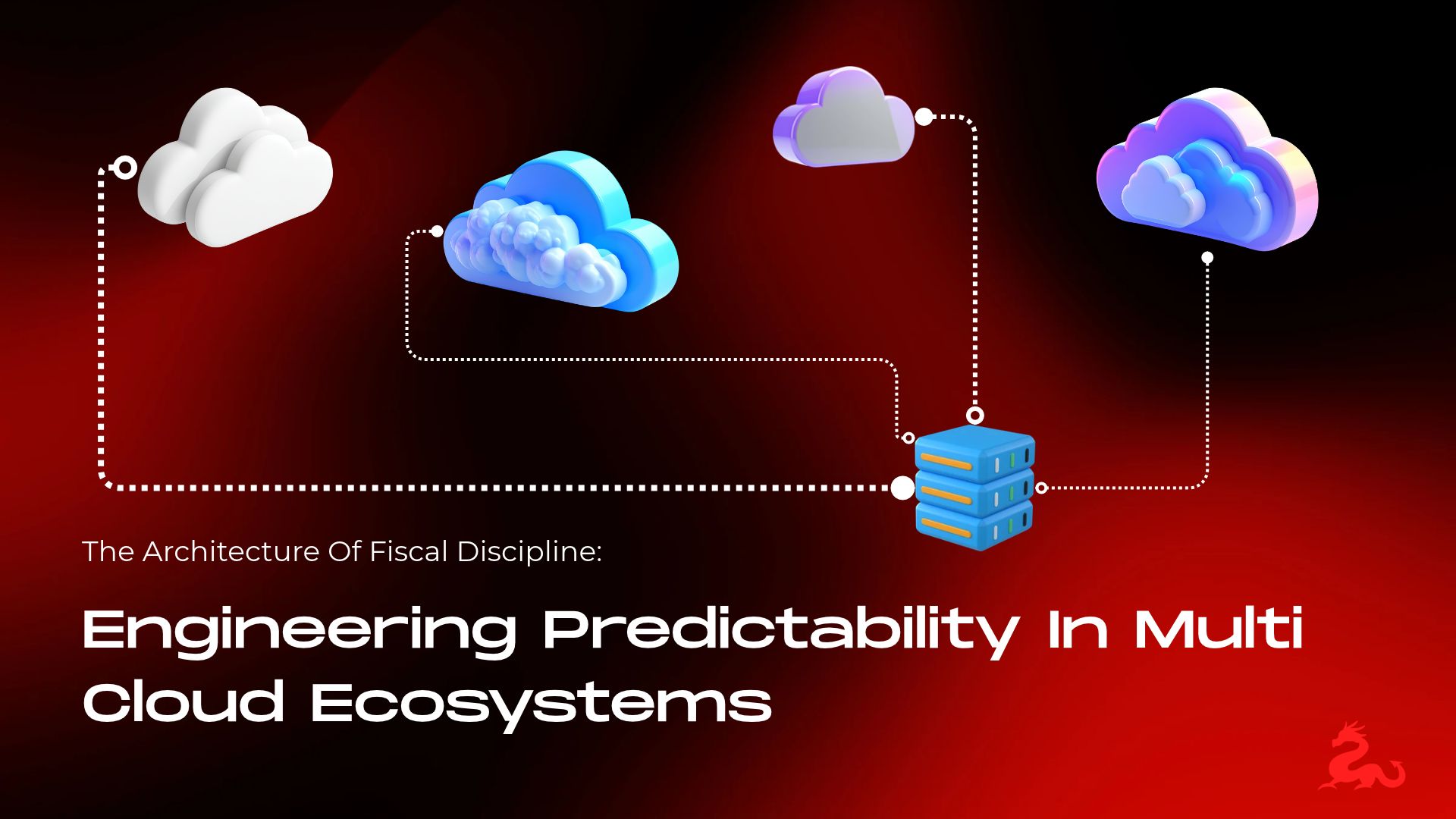
The industry is currently witnessing a reckoning. The unbridled enthusiasm for cloud migration has been replaced by the sobering reality of the invoice. Organisations are discovering that the agility promised by the cloud is often a masquerade for architectural inefficiency.
When cost overruns become the norm rather than the exception, it is a signal that the infrastructure is no longer serving the business; the business is serving the infrastructure. We must move past the superficiality of cost management tools and return to the fundamental principles of systems engineering.
The core of the problem lies in the disconnect between architectural design and economic outcomes. Many engineers build for infinite scale without implementing the finite controls required to manage it. This lack of discipline leads to orphaned resources, over-provisioned instances, and egress fees that erode margins.
Furthermore, the push for multi-cloud failover is often executed so poorly that it doubles the cost without significantly reducing the risk profile. A true multi-cloud strategy requires a unified control plane and a deterministic approach to data locality.
Consider three real-world examples where these failures manifest.
Fintech
A global fintech entity implemented a multi-region failover strategy using proprietary provider services. Because the services were not compatible across clouds, they were forced to maintain two separate codebases and two sets of infrastructure, leading to a 220 per cent increase in operational expenditure.
E-commerce
A large-scale e-commerce platform relied on automated vertical scaling without setting hard upper bounds. During a minor traffic spike caused by a botnet, the system scaled to a level that consumed three months of infrastructure budget in forty-eight hours.
Data Analytics
A data analytics firm moved to a multi-cloud environment but failed to optimise their data egress routes. The cost of moving data between the clouds for processing eventually exceeded the cost of the compute itself, rendering the entire project a net loss for the organisation.
Global Load Balancing and Egress Minimisation
The most effective method for stabilising costs while maintaining resilience involves the implementation of a provider-agnostic global load balancing layer. By utilising a common ingress point, an organisation can route traffic based on both performance telemetry and cost efficiency.
SaaS
In one specific deployment, a SaaS provider utilised this architecture to shift non-critical batch processing workloads to regions with lower spot instance pricing while keeping latency-sensitive customer traffic in premium tiers. The result was a 35 per cent reduction in monthly compute spend and a 15 per cent improvement in global response times.
This approach facilitates accelerated decision-making by providing a single pane of glass for both performance and spend, leading to high user adoption among both engineering and finance stakeholders.
Your 30-Day Action Plan
-
Days 1–10
Infrastructure Audit and Tagging Integrity
Conduct a comprehensive scan of every resource across every provider. Any resource not associated with a verified cost centre and a functional owner must be marked for termination. Implement a strict tagging policy at the API level that prevents the creation of any resource lacking the required metadata.
-
Days 11–20
Control Plane Unification and Egress Mapping
Map every byte of data moving across the perimeter. Identify and consolidate disparate data silos that are driving unnecessary cross-region or cross-cloud traffic. Begin the implementation of a unified monitoring layer that correlates infrastructure performance with real-time billing data.
-
Days 21–30
Failover Validation and Right-Sizing
Conduct a controlled failover exercise between regions or providers to verify that your resilience patterns actually function as designed. Simultaneously, execute a right-sizing exercise by analysing the P95 utilisation of every instance. Downgrade any resource that has maintained a utilisation rate below 40 per cent for the previous thirty days.
The period of unaccountable infrastructure growth has concluded. You are either an engineer of value or a curator of waste. I invite you to subject your current architecture to a rigorous audit against these principles of fiscal and technical discipline. If your infrastructure cannot survive a cost audit, it will eventually fail the business it was built to support.