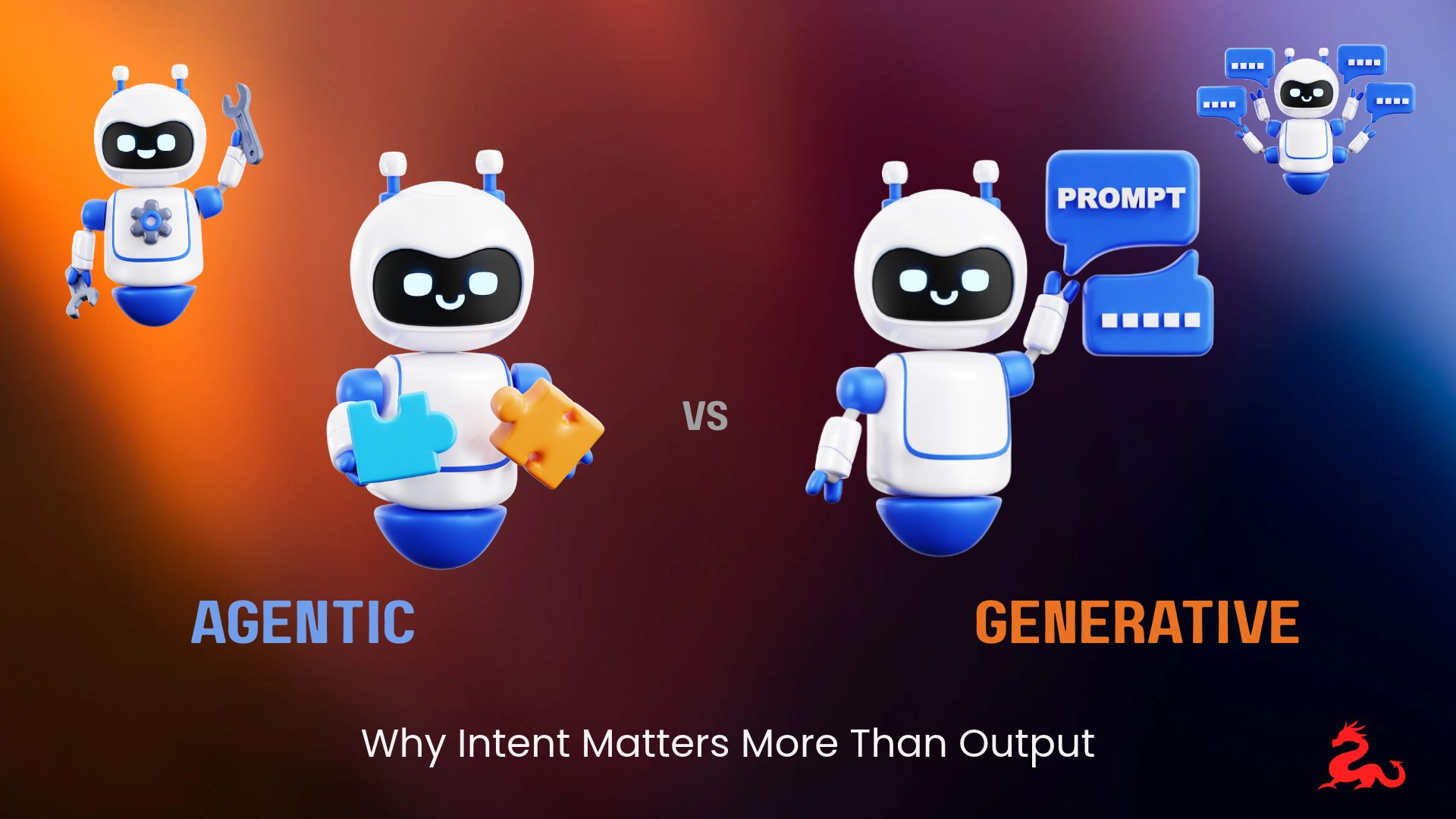
In today’s AI-saturated landscape, it’s easy to lump all intelligent systems into one bucket. But here’s the truth: not all AI is created equal. And if you’re building platforms, making investment decisions, or shaping enterprise strategy, you need to understand the difference between Generative AI and Agentic AI, because they serve fundamentally different purposes.
Generative AI: The Creator
Generative AI models are designed to produce content: text, images, code, music, and more. They’re trained on massive datasets and excel at pattern replication. Think ChatGPT, Midjourney, or GitHub Copilot.
Use Case
A marketing team uses generative AI to draft blog posts and social media captions. It saves time, boosts creativity, and scales content production. But it doesn’t decide what to write or why; that’s still human-led.
Agentic AI: The Decision-Maker
Agentic AI goes beyond generation. It acts with autonomy, intent, and goal-oriented behaviour. These systems can plan, reason, and execute tasks based on environmental feedback. They’re not just tools; they’re actors.
Use Case
A warehouse robot equipped with Agentic AI navigates dynamic layouts, avoids obstacles, and reprioritises tasks based on real-time inventory changes. It doesn’t just follow instructions; it adapts and decides.
Use Case
In fintech, an Agentic AI system monitors market conditions and autonomously reallocates assets based on risk thresholds and portfolio goals. It’s not just analysing; it’s acting.
Why This Matters
Confusing the two leads to strategic misfires. Generative AI is brilliant at output, but it lacks agency. Agentic AI can drive outcomes, but it requires robust guardrails and ethical oversight.
If you’re building SaaS platforms, designing autonomous workflows, or investing in AI-driven decision systems, this distinction isn’t academic; it’s operational.
Key Takeaways
- Don’t over-index on generative hype; ask if your use case needs autonomy or creativity.
- Audit your AI stack for decision-making capabilities vs. content generation.
- Design governance models that reflect the risks of autonomous behaviour.